



For some students, school is something to get through — not enjoy. These students feel pressure to keep up, and they don’t connect with what’s happening in their classrooms.
This dynamic could be contributing to a troubling reality: While youth mental health indicators have shown improvement in recent years, millions of young people are still struggling. In 2024, 2.8 million adolescents experienced a major depressive episode severe enough to disrupt their daily lives.
There’s growing recognition that the one-size-fits-all model of traditional schools — which focuses on standardization rather than customization — could play a role in this trend. Simultaneously, many young people feel lonely — a key driver of depression and anxiety.
Tremont School in Concord, Massachusetts, offers a powerful alternative to these problems. Through its Living Curriculum, this private, research-based school for grades 6–12 and postgraduate study emphasizes individualized learning paths, flexible curricula, and a community approach. This philosophy centers on agency and emotional engagement as essential conditions for learning.
Tremont School
A private, research-based school for grades 6–12 and postgraduate study that emphasizes individualized learning paths, flexible curricula, and a community approach.
A deeply personal need
Tremont School emerged from a deeply personal need.
“It was important to us that our children be in school together where they could use their interests and strengths to support one another — as they did at home,” cofounder David Vaughn recalled.
But with each of Vaughn’s children on different academic tracks and with distinct learning styles, their public school system couldn’t accommodate them.
'School of their dreams'
Vaughn and several other parents decided to create a “school of their dreams” rooted in community, experiential learning, and social-emotional development.
Tremont was founded on the belief that children are naturally curious, capable learners when given autonomy, trust, and meaningful support. This philosophy evolved into Tremont’s Living Curriculum: a dynamic, student-driven approach where learning begins with students’ interests and expands outward.
“[Traditional models] require the child to meet the needs of the school,” Vaughn said. “As opposed to the other way around.”
Finding the right environment to thrive
Many families arrive at Tremont after difficult experiences elsewhere.
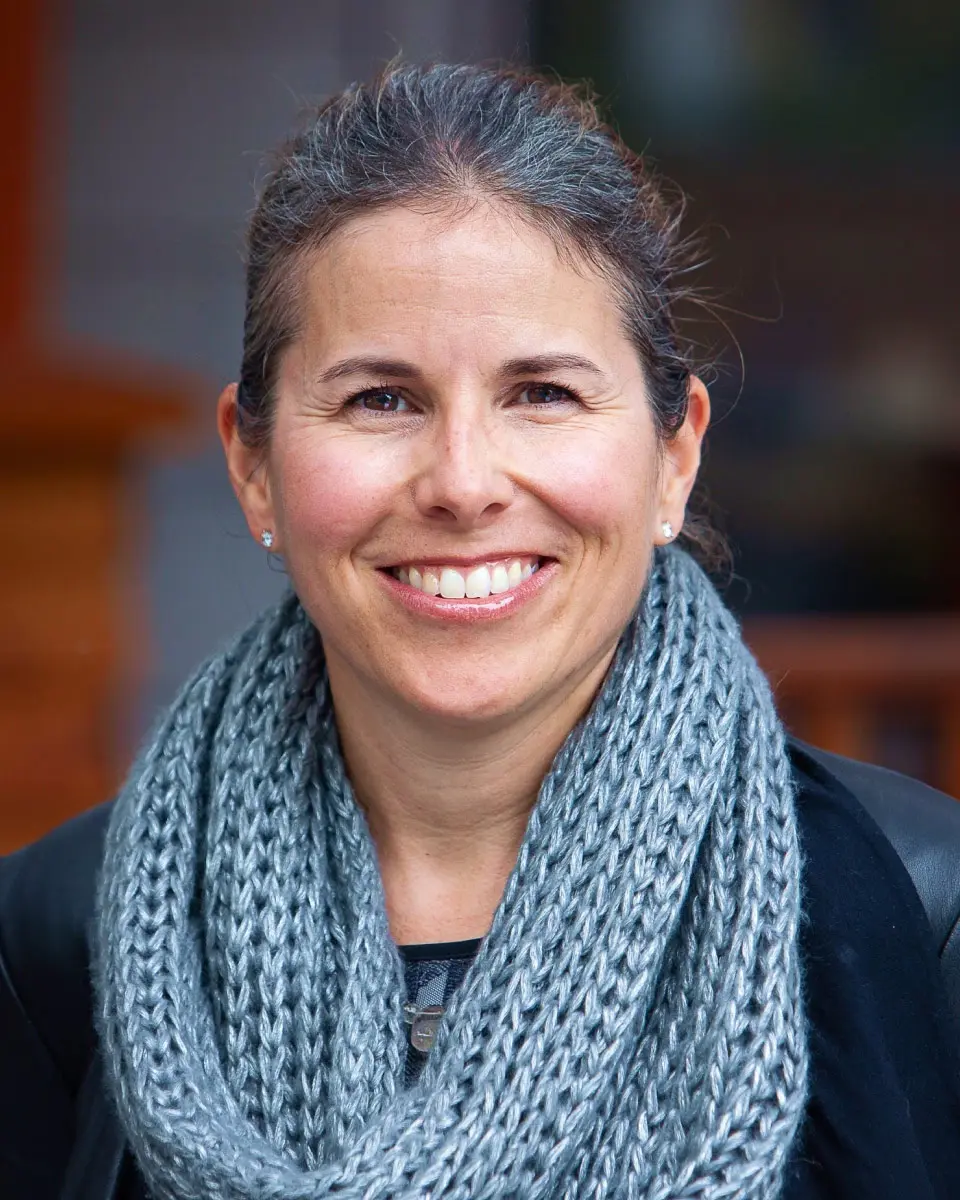
Krista Demas, Tremont’s head of school, described a familiar pattern: Students have been labeled as distracted or disruptive when they were simply in environments that didn’t work for them.
“It’s not that there’s something broken about the child,” she said. “It’s that the context is broken — the school isn’t set up in a way that they need it to be set up.”
In traditional settings, students often internalize this mismatch. Over time, it can manifest as anxiety, withdrawal, or behavioral challenges, making learning difficult.
Demas recalled a Tremont student who was working at a nearly high school level of math in third grade at his previous school.
Despite multiple conversations between this student’s mom and his previous school, they couldn’t find a way to challenge him in the ways he needed. As a last resort, the student worked on advanced lessons alone on his laptop in his previous school’s hallway. At Tremont, he skipped a grade and is now taking a high school math class.
It’s not that there’s something broken about the child. It’s that the context is broken — the school isn’t set up in a way that they need it to be set up.
Krista Demas
Tremont School's head of school
Transforming the periodic table
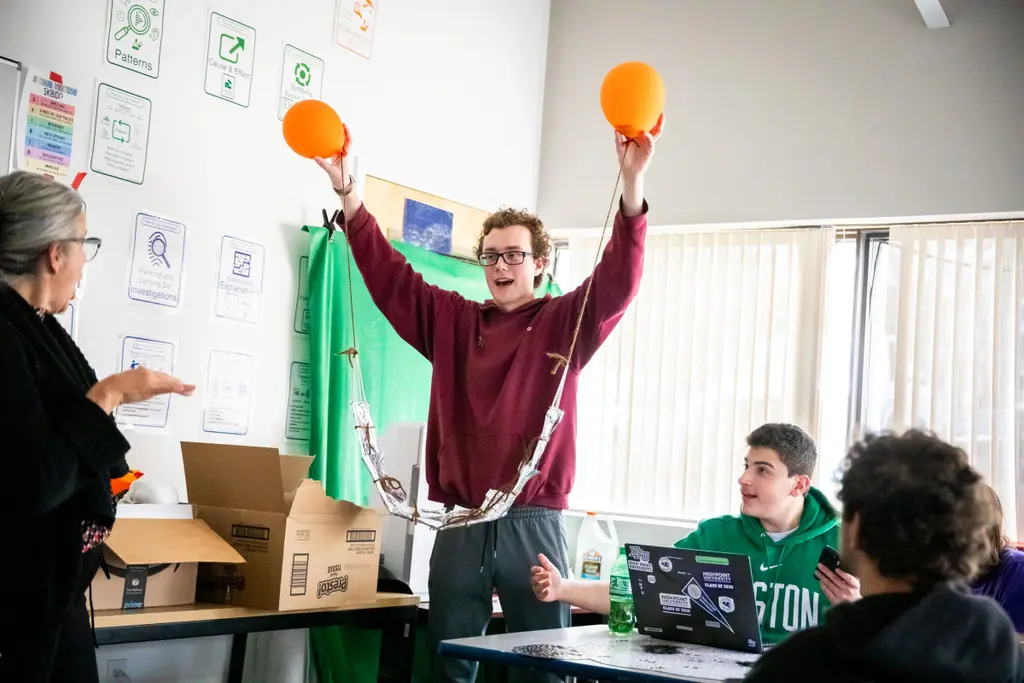
Tremont’s classrooms feel different: Students actively shape what they learn instead of passively receiving information.
Demas remembered a chemistry class where a student proposed turning the elements in the periodic table into superheroes. Rather than redirecting the class back to a pre-planned lesson, the teacher embraced the idea. Soon, the class was designing superhero versions of chemical elements — complete with properties, relationships, and backstories.
In another class, a lesson on genetics changed when a student mentioned being colorblind. The class followed that thread, exploring how genetic traits are inherited and expressed — grounding abstract concepts in real experience.
The Living Curriculum runs on the idea that engagement begins with relevance. When students see themselves in what they’re learning, curiosity and confidence grow.
Redefining rigor
Families considering alternative education models often ask: What about rigor? Tremont answers by redefining the term.
“‘Rigor’ in traditional education is often a proxy for pace, volume, and performance,” Demas said.
At Tremont, the focus is on the skills needed for confident, lifelong learning. Instead of grades — which are competitive and comparative — students try to master competencies and essential skills through goal-setting, narrative reporting, portfolio reflection, and presentation. They track their growth, identify areas for improvement, and articulate what they’ve learned.
“A student doesn’t have to stop at an ‘A’ — they can keep going,” Vaughn said. “And they don’t have to stop at a ‘D’ because they get demoralized.”

Vaughn has seen rigor play out at Tremont firsthand. His now-adult children left Tremont with a deep understanding of how they learn and a lasting curiosity about the world.
Stay up to date
Developing a living curriculum for all
From the beginning, Vaughn envisioned that the Living Curriculum could help other educators rethink how learning happens.
Today, this vision is taking shape as Tremont’s team distills what they’ve learned into a scalable framework for others. The challenge isn’t just defining Tremont’s philosophy but translating it into practice.
This approach includes everything from instructional design to assessment and classroom culture. It also features tools to help teachers connect academic content to student interests — something Tremont is currently developing through a new technology platform.
Lighting the fire of learning
The Living Curriculum reflects a broader shift from compliance to curiosity. It’s a transition from standardized systems to an environment that supports students’ well-being by cultivating belonging and building their confidence, identity, independence, and achievement.
It’s a switch grounded in an often-overlooked reality: Students are not empty vessels to be filled. They’re individuals to be understood across many dimensions; when these understandings exist and are stewarded, scholars emerge. Vaughn cites a quote sometimes attributed to the poet William Butler Yeats:
“‘Education is not the filling of a pail, but the lighting of a fire,’” Vaughn said.
The Stand Together community partners with changemakers who are tackling the root causes of America’s biggest problems.
Learn more about Stand Together's education efforts and explore ways you can partner with us.

Parents want more than good schools. They want personalized options.

A school where AI is baked into the curriculum
What if every school day were a field trip?