




Whether shopping for groceries or gas, American consumers expect to compare prices and choose the products and services that work best for them and their families.
But health care is often the exception.
The third-party payment model — where an insurer pays for a patient’s care — is at odds with virtually every other consumer market. Originally intended to protect people from catastrophic medical expenses, third-party payment now accounts for 90% of Americans’ health care spending. As a result, insurers have gained greater influence over day-to-day health care decisions, contributing to surprise billing, coverage denials, rising premiums and deductibles, and fewer opportunities for patients to shop for value.
But it doesn’t have to be this way. Health care can and should operate like other sectors, where consumers are empowered to know prices, compare options, and choose simple, affordable care that’s right for them.
To unpack how third-party payment has contributed to a health care system that doesn’t work for many people, and how we can replace that model with a better one, Stand Together spoke with Dean Clancy, a senior health policy fellow at Americans for Prosperity. The solution, he said, lies in shifting control to where it belongs: the patient.

Stand Together: What is third-party payment in health care, and how does it affect the average American?
Dean Clancy: Third-party payment is when someone else (a third party) pays a provider (the second party) on behalf of a patient (the first party). In the American health care system, the third party is typically a private insurer — often through an employer-sponsored plan or the federal government’s Health Insurance Marketplace — or a government insurer such as Medicaid or Medicare.
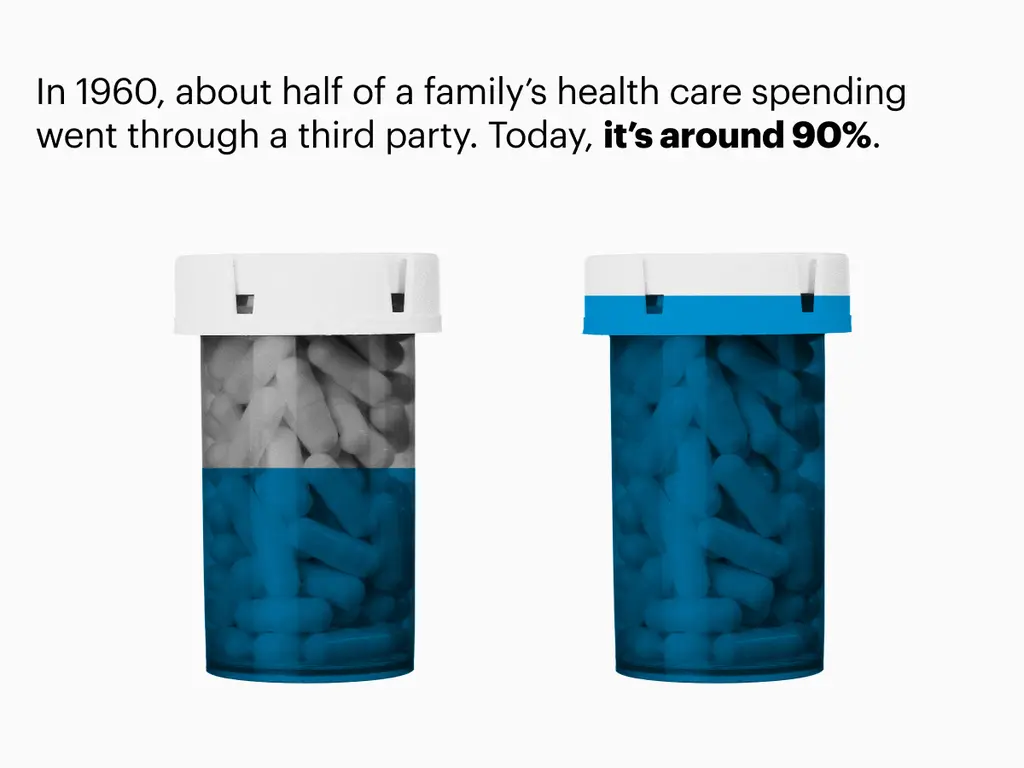
The third-party payment model was intended to help people pay for big medical expenses, such as a traumatic injury or illness, but it has ballooned over time. In 1960, about half of a family’s health care spending went through a third party. Today, it’s around 90%.
As a result, insurers manage virtually every aspect of health care. Because they bear financial responsibility, they naturally attempt to limit their spending. Americans experience this in the form of claim denials, soaring premiums and deductibles, confusing billing, and inadequate care.
And the problem is only getting worse. Health care affordability has become voters’ No. 1 economic concern. At the same time, claim denial rates have surged tenfold since 2014, while premiums have tripled and deductibles have doubled.
Health care can and should operate like other sectors, where consumers are empowered to know prices, compare options, and choose simple, affordable care that’s right for them.
Dean Clancy
Senior health policy fellow at Americans for Prosperity
The third-party payment system is often cited as a key contributor to rising health care costs. How does it make services more expensive?
While the causes are multifaceted, a primary reason is that insurers are the customers — and they’re not shopping for value the way a patient would. As a result, providers face less pressure to compete for patients’ business, and costs increase over time.
At the same time, since patients don’t directly pay for services, they rarely know the true cost of a service, which can inflate demand and increase prices for everyone. A person paying out of pocket for an MRI, for example, would likely be more discerning about whether it was medically necessary. But when insurers pay the bill, patients and providers could be more likely to seek unnecessary treatments or services, resulting in higher overall demand and system costs.
While insurers attempt to negotiate lower rates with providers, they’re often outmaneuvered by large hospital systems with significant market power. And, most importantly, patients are absent from those negotiations.
How do you respond to critics who argue that health care is too confusing or important to function like other consumer markets?
There’s a belief that health care is too complicated for people to navigate on their own, or that they lack the knowledge to make well-informed decisions. The Nobel Prize-winning economist Kenneth Arrow said health care is different from other competitive markets in part because the doctor just knows more. But this overlooks a person’s capacity to learn and act in their own best interests — especially in the age of AI and the internet, when information is more accessible than ever.
Health care doesn’t have to be different. Take laser eye surgery. It’s never been covered by insurance because it’s considered cosmetic rather than medically necessary. But because patients pay out of pocket and shop around, prices are constantly falling, and quality and customer convenience are constantly improving.
While not every aspect of health care can function exactly like laser eye surgery, it’s a compelling example of what’s possible when patients, rather than insurers, are in control.
Insurers are the customers — and they’re not shopping for value the way a patient would. As a result, providers face less pressure to compete for patients’ business, and costs increase over time.
Dean Clancy
Senior health policy fellow at Americans for Prosperity
Shifting purchasing power from third parties to patients can seem like a Herculean task. What can the average person do to be more in control of their health care?
Americans are not accustomed to thinking of health care as something they purchase — they think of it as something managed by insurers. But if more people pay directly for routine care, they will increase their purchasing power and the market will respond accordingly.
While asking a provider for cash prices can feel intimidating or unusual, norms are beginning to shift — more patients are asking for them, and providers are becoming accustomed to direct-pay customers. And in many instances, patients realize that medical costs are more flexible than they think. I have a relative who pays out of pocket for most of his health care costs. Rather than automatically paying a $500 bill for a routine office visit, he questioned the charge and negotiated the bill down to $200.
How would you design a health care system where patients can access affordable care that’s right for them?
The answer is not to impose a new comprehensive top-down system — it’s to remove barriers and expand consumer choice through incremental reforms that shift purchasing power to patients.
In an ideal world, patients would have a “three-layer cake” of health care that preserves financial protection while restoring patient autonomy:
- A tax-advantaged Health Savings Account (HSA) to purchase routine care directly. An HSA is a tax-advantaged, personally owned and controlled “medical wallet” that offers patients, on average, a 25% discount on every medical purchase. This would allow people to maximize their choice and control over health care decisions.
- A direct primary care (DPC) subscription that provides access to a doctor of a patient’s choosing. These subscriptions offer one low fee, with no hidden or extra charges — or third-party involvement. And they could help improve health outcomes, as research shows that DPC doctors spend four times as much time with their patients as traditional, insurance-based doctors do.
- A catastrophic insurance policy to protect individuals and families from big, unexpected expenses, rather than managing routine medical costs. Since they don’t cover everyday services, they offer significantly lower monthly premiums than traditional insurance plans.
Stories that inspire, in your inbox.
Looking ahead, are you optimistic that more alternatives to the third-party payment model will proliferate?
They already are. More people are demanding new ways to access, pay for, and manage their health care — and the market is responding.
- Retail websites like CostPlusDrugs.com allow patients to buy prescription medications directly from the manufacturer at a steep discount.
- More providers, such as the Surgery Center of Oklahoma, offer patients fully transparent, up-front, and inclusive pricing that is often significantly less expensive than going through traditional insurance.
- Expanded access to DPCs and HSAs helps patients take control of their routine, everyday medical spending. Currently, only 1 in 10 Americans has access to an HSA, but recent legislation has expanded access to millions of Americans who were previously ineligible.
Health care must increasingly resemble other markets through incremental reforms and consumer demand — not top-down government mandates. If we focus on empowering patients with more choice and control, we can make health care work better for everyone.
Dean Clancy is a senior health policy fellow at Americans for Prosperity and a nationally known health care freedom advocate with more than 20 years’ high-level policy experience in Congress, the White House, and the U.S. health care industry. He is an architect of AFP’s Personal Option plan to give every American reliable, hassle-free health care that they can afford.
The Stand Together community partners with changemakers who are tackling the root causes of America’s biggest problems.
Learn more about Stand Together’s health care efforts and explore ways you can partner with us.
Affordable health care is more achievable than we think

How health care works better when patients are in control

Caregivers are overworked. This tech could offer hope.