



Restorative justice is a growing approach to accountability and safety that prioritizes healing over punishment. Instead of treating crime as a violation of rules, it views it as harm done to people and relationships, and focuses on repairing that harm through dialogue, responsibility, and community engagement. This is a bottom-up approach — not imposed from above but co-created by those most affected. As more communities search for better responses to violence and incarceration, restorative justice is offering a different path forward.
Unlike traditional justice systems, which often isolate people and emphasize retribution, restorative justice brings those affected together to understand what happened, address root causes, and rebuild trust. This shift creates space for responsibility, not just punishment — and for healing.
What is restorative justice?
So, what is restorative justice? At its core, it’s a people-first approach to accountability that empowers those most affected to take part in the solution. It recognizes harm as something experienced by both people and relationships and approaches accountability as an opportunity to repair, rebuild, and grow through voluntary action. That shift reflects a deeper belief that when people are empowered to take responsibility and contribute, everyone benefits.
This process typically includes three key voices:
- Victims, who are empowered to share their experience, ask questions, and request accountability
- Offenders, who are encouraged to take responsibility and make amends in a meaningful way
- Community members, who help support healing, reintegration, and long-term safety
Restorative justice addresses harm directly, in such a way that seeks understanding and transformation — not exclusion.
Why restorative justice matters
Traditional systems often remove victims from the process and focus on abstract penalties. But restorative justice begins with dignity: It recognizes each person’s capacity for growth and contribution, even after serious mistakes. That belief creates space for personal transformation.
This approach also aligns with the principles of mutual benefit and empowerment. When people are invited to repair harm and restore trust, communities become stronger, not more divided. And when justice becomes a shared effort rather than a top-down directive, people can see themselves as part of the solution.
3 restorative justice examples in action
Communities across the country are exploring new approaches to safety and accountability that recognize the root causes of harm and help people repair it. These efforts prioritize connection over isolation and healing over punishment. At the center are people and programs rethinking what justice can look like when it starts with dignity.
Here are three of those programs in action:
Stories that inspire, in your inbox.
1. Café Momentum is expanding community-based alternatives
Café Momentum is reimagining what justice can look like for youth. Each year, more than 720,000 young people enter the juvenile justice system — and 80% are rearrested within three years.
This nonprofit offers a different path.
The program begins with a 12-month curriculum that provides teens with hands-on kitchen experience while working with case managers to set personal goals. Inside the kitchen, young people build skills, receive mentorship, and develop confidence. But the real power lies in the environment of respect and mutual accountability. For many participants, it’s the first time they’ve experienced mutual benefit — contributing and growing in an environment that treats them as partners instead of problems.
Founded in Dallas and now expanding to cities like Pittsburgh and Nashville, Café Momentum tailors each location to meet local needs. What doesn’t change is the core principle: With support, justice-involved youth can thrive. As one director put it, “We want young people to thrive instead of survive.”
2. Recidiviz uses technology to drive smarter justice
In today’s justice system, siloed and outdated data often keeps people behind bars longer than necessary, even when laws allow for early release.
“Bad data traps people in the system,” says Clementine Jacoby, executive director at Recidiviz. Parole officers and judges are frequently unaware that someone has fulfilled the conditions for release simply because the information is buried across disconnected databases.
Recidiviz helps fix that. The platform pulls together real-time data from across agencies and makes it usable — showing who’s eligible for release, who’s close, and who needs more support. It also customizes tools to fit the needs of local departments, many of which are underfunded or short-staffed.
In Idaho alone, smarter data helped safely return 70,000 people to their communities, saving the state over $1 billion. Beyond savings, this kind of clarity enables fairer, faster decisions and reduces harm to individuals and families. It’s an example of how openness — the free flow of ideas and information — helps institutions better serve people.
3. The Frederick Douglass Project supports re-entry through connection and growth
Returning home from prison is a pivotal moment that’s often met with isolation, not support. The Frederick Douglass Project works to change that by fostering human connection where it’s least expected: inside maximum-security prisons.
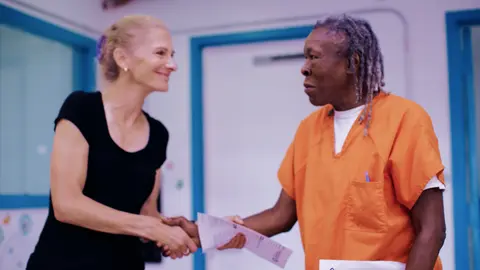
Through face-to-face conversations, visitors from all walks of life — students, faith groups, community leaders — sit down with incarcerated individuals for honest dialogue. By building human connection from the bottom up, this program taps into people’s strengths and unlocks new paths forward. That connection can reduce recidivism and build confidence for life beyond the walls.
Broader applications of restorative practices
Restorative justice is more than a response to harm — it’s a shift in how communities understand accountability and human potential. Across the country, people are using restorative practices not just in courts, but in neighborhoods, re-entry programs, and public safety strategies.
These efforts focus on connection over exclusion, helping individuals repair harm and return to their communities with dignity.
It’s not a quick fix. It takes time and a commitment to seeing people as more than their worst moment. But the results are real.
By empowering individuals to take ownership of their actions and contribute to healing, restorative justice turns cycles of harm into pathways for growth. When justice is rooted in human dignity and community restoration, it creates lasting change.
More about restorative justice
- These five solutions clear justice system backlogs in ways that are safer, more effective, and better for communities than punishment.
- How are these re-entry programs helping to transform the lives of formerly incarcerated individuals once they’re released?
- What happens when restorative justice replaces punishment? JUMPSTART Prison Ministry tries to answer that question.
Learn more about Stand Together’s criminal justice efforts, and explore ways you can partner with us.
U.S. homicide rates are falling. Why?

Think violent crime is inevitable? Think again.
Homicide rates are too high in America. Here’s what we can do.