



If something breaks around the Sacred Settlement Mosaic, chances are Jr.’s already fixed it — quietly, without being asked. “If I see something that needs to be done, I’ll automatically do it,” he said.
Helping out isn’t just a habit for Jr. It’s who he is. “I like to help a lot,” he added with a smile. “It’s kind of funny to see the reaction, like, ‘How did that get fixed? Did Jr. do that? I know he did.’”
So when his neighbor, Jamal Love, needed help with his wife’s bike, Jr. didn’t hesitate.
“Our neighbors are quick to come and help us,” said Love. “They’re happy to. It’s like they’ve invested in us, and we take care of each other.”
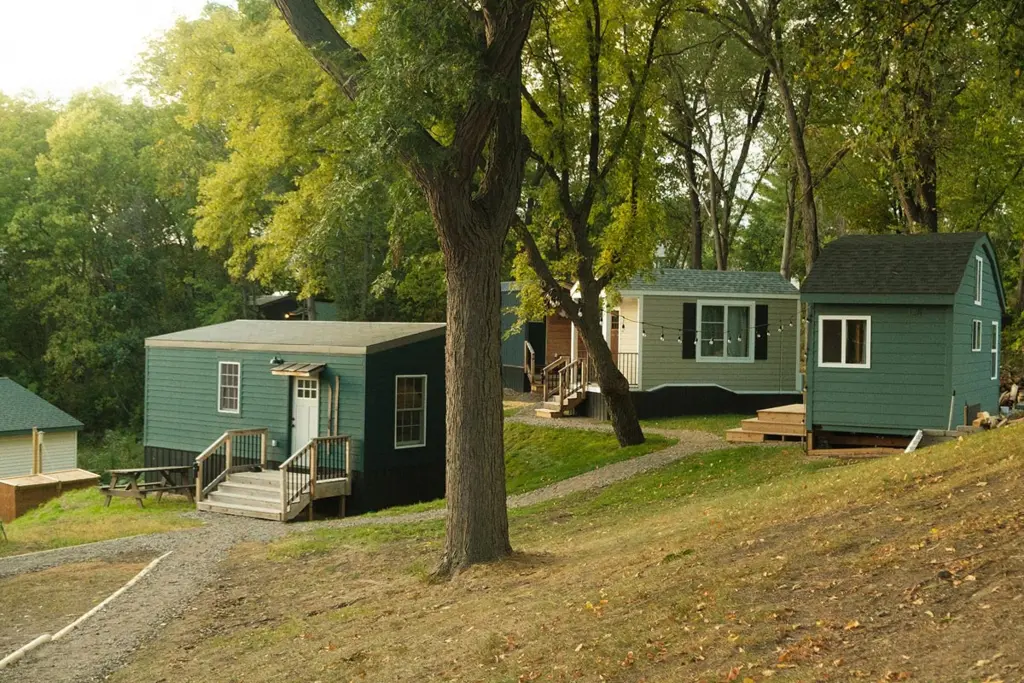
Both men live in Sacred Settlement Mosaic — a community of six tiny homes and a church tucked into a St. Paul, Minnesota neighborhood. They’ve been neighbors for more than two years. Love and his wife, Kim, relocated from a suburban three-bedroom home, while Jr. and his partner, Chrissy, transitioned from a 5-by-4-foot shed hidden deep in the woods.
At Mosaic, Love and Jr. both live in homes under 400 square feet. They pay rent, follow community guidelines, and rely on the church for showers, laundry, and access to a full kitchen. Both men will tell you Mosaic has given them something they’ve never found elsewhere: deeper friendships and a stronger sense of purpose.
The Mosaic community was created through a partnership between Settled, a nonprofit working to end chronic homelessness, and Mosaic Christian Community, a Church of the Nazarene congregation committed to a lifestyle of hospitality. Five other churches in the St. Paul area contributed by donating the tiny homes. It’s more than just housing. It’s a place where trust, belonging, and community are built one meal, one greeting, one quiet fix at a time.
So how did two men from such different backgrounds end up living side-by-side in a tiny home village? To understand that, you have to look at the vision behind Mosaic — and the growing movement that made it possible.
Calling on the church to invite its neighbors off the streets
For the past 20 years, federal and state governments in the United States have largely embraced a model that prioritizes permanent housing first. Address housing, then work on everything else.
But according to Dr. Gabrielle Clowdus, a researcher at the University of Minnesota and founder of Settled, housing alone isn’t enough. Many studies highlighting the success of Housing First programs that focus first and foremost on finding housing, only track participants for a year after being housed. Longer-term research tells a different story — after three years, only about half of participants remain in the programs.
While the shortage of affordable housing plays a role, Clowdus’ research points to a deeper, tangled root system of causes underlying chronic homelessness: lack of affordable housing, restrictive zoning, addiction, and mental health challenges. And underneath it all, one often-missed cause: the catastrophic loss of family.
“If you’ve been on the streets for a year, five years, 10, 20 years, you aren’t there because of a lack of housing,” Clowdus said. “This is a group of people that come from childhoods of extreme neglect, abuse, and violence. That leads to adulthoods of feeling unloved, unwanted, and pushed to the furthest fringes of society. You don’t solve that by giving someone an apartment. You solve it by walking with them and showing them what trust looks like — what unconditional love looks like.”
That’s why Settled partners with local congregations to combine affordable housing with intentional community for individuals and couples transitioning out of chronic homelessness. So far, two Sacred Settlements are fully operational — Mosaic and Prince of Peace. Several more settlements are in various stages of development across Minnesota and in other states, including Open Door, a planned community of 12 tiny homes hosted by a large nondenominational church near St. Paul.
These communities are not just about providing the security of a roof and a locked door.
“We’re calling on the American church to use its land and buildings in the greatest way possible: to invite their neighbors off the streets,” said Clowdus. “When our neighbors move into a Sacred Settlement, we’re saying, ‘You are wanted and welcome here for as long as you want to be here. We like you. We hope that you find your home here.’”
At Mosaic, the congregation doesn’t just host the Sacred Settlement — they’ve made it part of their lives.
“We feel a deep calling to be good neighbors, to serve, to live intentionally, and to practice hospitality in our own homes,” said Meredith Campbell, a Mosaic Christian Community member and a settlement leader. “So when we first heard about the opportunity to turn our church into a home and to welcome neighbors into the church, to live on our property, and to use the church building as an extension of their home, this just made a lot of sense to us.”
Housing without community just isn’t enough
Clowdus remembers Anthony, a man who’d spent years experiencing homelessness. They became friends, often sketching out tiny home ideas on napkins in coffee shops long before the first Sacred Settlement existed. Eventually, Anthony’s name rose to the top of a Housing First waitlist.
The apartment he got was above a strip of bars — a terrible fit for someone struggling with alcoholism. Still, turning it down meant starting over at the bottom of a seven-year waitlist. So Anthony said yes.
He moved in with nothing but an air mattress and a pump. No dishes, no blanket — just a kind but overworked caseworker who promised to check back the following week. That first night, he covered himself with an extra set of clothes.
“Anthony didn’t live on the streets anymore, but in every other way, he was still completely impoverished,” Clowdus said. “He was surrounded by neighbors who hadn’t chosen to live beside him, who didn’t understand the trauma he carried or how it showed up on hard days — when he was triggered by his PTSD or his traumatic brain injury.”
Anthony had a roof. But not a home.
Stay up to date
“This is a poverty of relationships,” said Clowdus, describing the deep isolation that defines chronic homelessness. “Who’s looking at them with awe and delight and wonder and letting them know that they have great value? They go days or weeks without anyone looking at them.”
Jr.’s story is different.
He lived in a tent, then a shed, through 10 brutal Minnesota winters. A local nonprofit brought food and hand sanitizer. On the coldest nights, Jr. burned the sanitizer as fuel to stay warm. He and Chrissy avoided larger encampments out of safety concerns. Even in isolation, danger was never far, and sleep was a luxury Jr. couldn’t afford.
“When I was in a tent and stuff, I would stay awake,” he said. “I wouldn’t fall asleep. I’d be up and alert because somebody had to be protective over her (Chrissy). So if anybody came, I would be up and ready for them.”
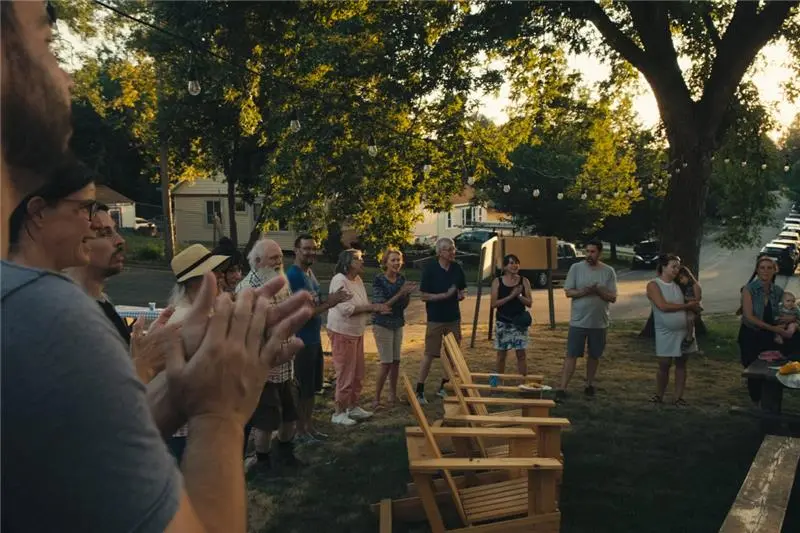
At Mosaic, Jr. cooks dinner with neighbors, attends community gatherings and outings — like hiking and birthday parties at Chuck E. Cheese. He also contributes: shoveling snow, sharing donated clothes, and fixing things.
He is playful with his neighbors now. One night, he found Love sitting on the porch, knitting. He took care to notice what Love enjoyed and, soon after, started keeping an eye out for donated yarn for Love.
Jr. still keeps watch over those around him — no longer out of fear, but out of love. He’s not just surviving. He’s part of something.
“It feels like you’re wanted,” he said. “Instead of being alone or just with your significant other. Everybody knows me. They talk about me only in a good way, and I’m kind of famous. Everybody knows Jr.”
Where Anthony was placed in housing and left profoundly alone, Jr. was welcomed into a community. That difference — the presence or absence of connection — can determine whether housing is the only need or if more is needed to thrive.
The quiet power of sharing life
That same spirit of belonging and mutual care is what drew Jamal and Kim Love to the Sacred Settlement Mosaic.
“For years, we had been involved in different ministry outreaches to the homeless population,” said Love. “But we still had ideas like, should we have someone in our home? What if we bought a home for someone? What more could we do?”
Jamal and Kim are what Settled calls “intentional neighbors.” They voluntarily left their suburban home and chose to live alongside those who have experienced chronic homelessness. Every Sacred Settlement reserves one-third of its tiny homes for intentional neighbors — people who commit to sharing life, offering friendship, and building trust through the rhythms of everyday community.
Their role? It’s simple, really. They’re here to be good neighbors. Nothing more, nothing less.
Before they moved in, the Loves made a decision: They wouldn’t act as authority figures. Their neighbors already had caseworkers and service providers. What they needed was family.
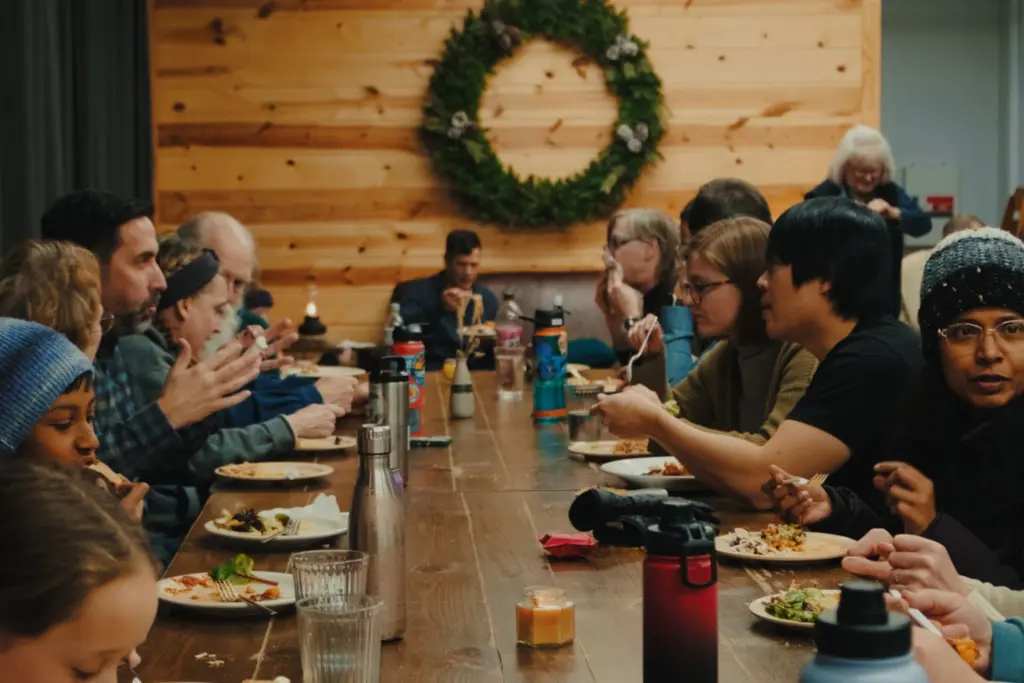
Instead, the Loves have chosen to be present. They walk the neighborhood, host movie nights, and create space for connection through small, consistent acts — like always eating their meals at the church and setting an extra plate, just in case someone stops by.
“We started seeing the impact of just having our life be near theirs and how much of ourselves we share, even without intention,” Love said, noting that several of his neighbors have commented on how kind he and Kim are to each other. “It’s grown from there. It took a couple of years, but there’s a level of intimacy that has begun to grow amongst the people. There’s a trust and a connection that you start to have when you’re near each other.”
What they didn’t expect was how much they themselves would need that connection.
“We came here to offer community and to be generous and to do all of these things,” he said. “And what happened is we received those things from our neighbors. We were the ones who needed that. There’s no distinction. Everyone needs that.”
Community reveals what the world often misses
Since coming to Mosaic, Jr. has taken up woodcarving. He makes walking sticks — sturdy, handmade gifts for his community.
“Anything you can put on paper, I can put on a stick,” he said with quiet pride.
He carves them from Diamond Willow, a tree marked by fungus that leaves deep scars in the wood. At first glance, it looks damaged — twisted, rough, imperfect. But when Jr. strips away the bark and sands it smooth, intricate diamond patterns emerge from beneath the scars.
The transformation echoes what’s happening in Sacred Settlements. What some might dismiss as broken — wood or people — can, with patience and care, reveal strength shaped by hardship.
Healing doesn’t mean erasing the past. It means honoring it, refining the whole person, and helping them return to the world as someone useful, whole, and beautiful.
“There’s this fear that somebody experiencing homelessness is dangerous or unsafe or unwell,” said Campbell. “In my experience, our neighbors are some of the most generous people I have ever met. They have a wonderful sense of humor, great gifts, and talents. I’m honored to be in relationships with our neighbors.”
Settled is supported by Stand Together Foundation, which empowers individuals to reach their full potential through community-driven change.
Learn more about Stand Together’s efforts to build strong and safe communities and explore ways you can partner with us.
In Conversation: How Army of Normal Folks helped turn a national bed build into local contribution
Our Take: What a customer-first mindset can teach nonprofits
At this nonprofit for veterans, feedback is key to decision-making.