



When most people were looking forward to the biggest football game of the year, they weren’t necessarily picturing the players off the field. But for the athletes nominated for the NFL’s Man of the Year Award, on Feb. 6, the work they do in their communities stole the spotlight.
To kick off Super Bowl weekend, the NFL recognized all 32 players nominated for NFL Man of the Year, the “Nobel Peace Prize of the NFL,” according to Troy Vincent, executive vice president of football operations at the NFL and the 2002 NFL Man of the Year winner. Since 1970, this award has recognized players who have shined on and off the field, positively impacting their communities through leadership and action. Each NFL team nominates one player, and a panel of judges chooses the winner. This year, Arik Armstead received the prestigious award.
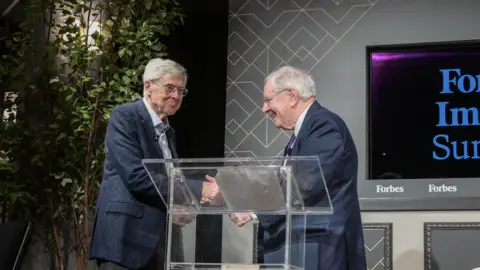
Stand Together co-hosted this year’s Man of the Year Luncheon with the NFL and Sports for Impact, celebrating these exceptional individuals who use their gifts and talents to address challenges they’ve seen in their own communities. These elite athletes have the resources, authentic experience, and platform to make an impact anywhere — but most choose to focus on issues in their hometowns first and expand from there.
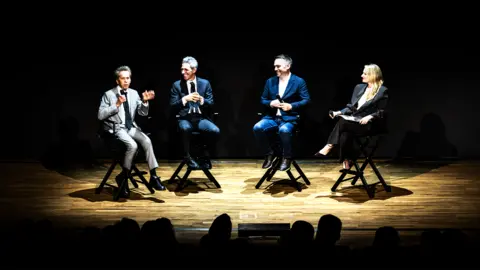
The following players are past recipients of the NFL Man of the Year award. They were chosen to speak at this year’s ceremony because they share something important in common. They have all faced serious obstacles on their road to the NFL — but instead of leaving the past behind, they’ve stepped up and created new solutions to problems they experienced. Their stories exemplify the real meaning of the Man of the Year Award: NFL players may be best known for their performance on the field, but their true legacy is defined by their impact on others.
These players show that anyone, athlete or not, can make a difference and that those closest to the problems are best equipped to solve them.
Marty Lyons knows every person deserves a full life — no matter how long that life is
For Marty Lyons, his time on the New York Jets may be what he’s best known for — “But I think if I had to choose between what I did on the field and off the field, it would be off the field,” he said. “Football for me was a platform. When you have that platform, you find your purpose in life.”
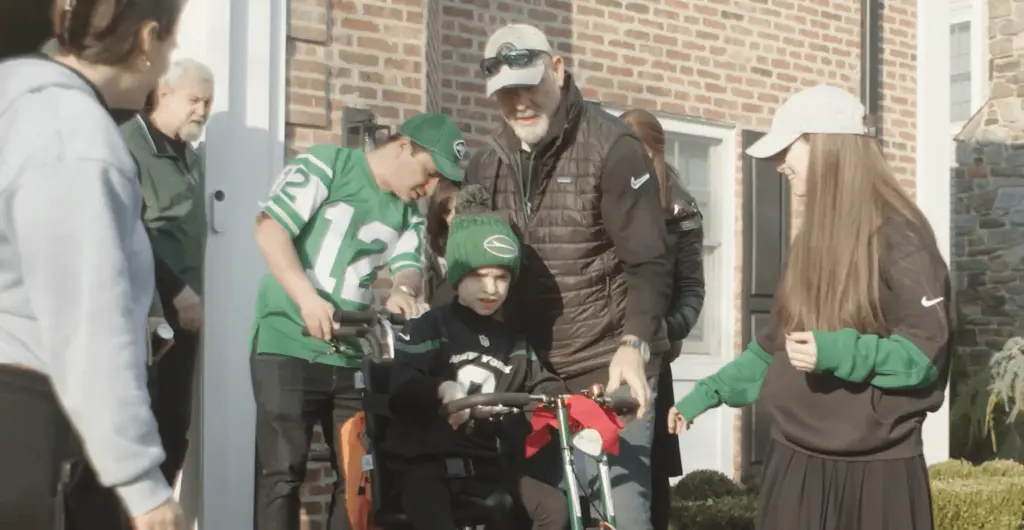
In 1982, within just six days, Lyon’s son Rocky was born, his father passed away unexpectedly, and a terminally ill child he had grown close to died at only five years old. The tragedies spurred him to start the Marty Lyons Foundation to help terminally ill children have a better quality of life, whether that’s an adaptive bike, a trip to Disneyland, or any other experience that may seem out of reach.
“We all can make an impact,” Lyons said. “You don’t have to be rich. You don’t have to be an NFL player. Aren’t we all in this world to make one another better? We all have that responsibility.”
Stories that inspire, in your inbox.
Troy Vincent brings his success back to the youth of his hometown
Troy Vincent grew up in Trenton, New Jersey, during the 1970s and ’80s, surrounded by crime and drugs. When he joined the Miami Dolphins, he committed to helping others overcome the challenges he once faced.
“I’m not who I am today without my life experiences in Trenton,” Vincent said. “So I knew early on that if I ever had the platform, I would give back to the city of Trenton.”
With his wife Tommi, Vincent started Love Thy Neighbor. The organization provides resources to local schools and organizations, based on one of Vincent’s core beliefs: “Those closest to the issues are those closest to the solutions.”
These resources range from providing schools with nutritious meals and essential learning tools to supporting youth mentorship programs and addressing domestic violence.
We all can be role models in our own right, with our families and our children and our communities. This is your true legacy. Not the touchdowns, not the interceptions. It’s about making a difference.
Troy Vincent
Derrick Brooks didn’t have to look far to see where he could make a difference
Derrick Brooks always hated the stereotype that because he was a jock, he couldn’t also excel in academics. He was a self-described “nerd” in high school — so much so that he initially quit the football team to focus on studying.
Even after joining the Tampa Bay Buccaneers, he continued to value the fulfillment and purpose that academics had brought to his life. He viewed his new platform as an opportunity to help youth reach the same potential he had — in the classroom and beyond.
His first question after being drafted? “How do I use this platform of the NFL?” He said, “How do I step my game up and serve the community?”
The answer came in 1996 when two young fans introduced him to the underserved local Boys and Girls Club. In response, he founded Derrick Brooks Charities to provide under-resourced kids with access to academic resources and extracurricular opportunities. The group helps local youth go on enriching outings — with destinations like Washington D.C. and South Africa — to show them how transformative and inspiring education can be.
Derrick Brooks Charities made such an impact that in 2005, Brooks founded the Brooks DeBartolo Collegiate High School to allow a broader group of students to discover new passions, talents, and paths forward.
Brooks hopes that every NFL player views his actions as a blueprint for their work off the field.
“In representing the Man of the Year, I’m obligated to keep the bar high and raise it every year — to give a very real example of what it’s like to serve the community,” he said.
How Warrick Dunn used a tragic past to accomplish good in his community
Warrick Dunn didn’t let his personal struggles discourage him — instead, he used them as motivation.
Dunn and his five siblings were raised by a single mother, Betty, who dreamed of becoming a homeowner. She worked two jobs — as a Baton Rouge police officer and a security guard — to save up for a downpayment. But just two days after Dunn’s eighteenth birthday, that dream was cut short when she was killed in a violent ambush.
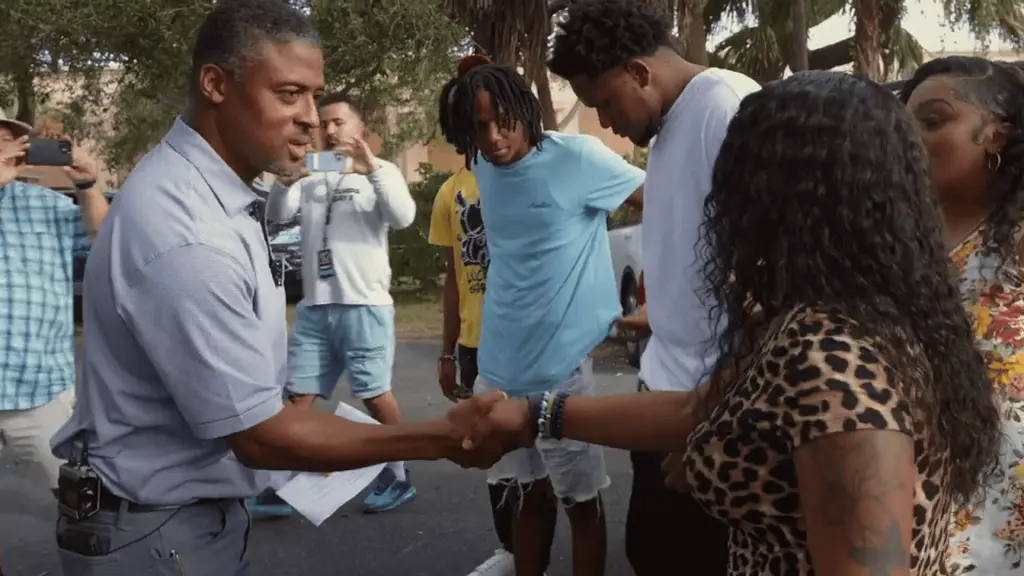
In 1997, Dunn started Warrick Dunn Charities. Its flagship program, Homes for the Holidays, provides down payment assistance and furnishings to help single mothers purchasing their first homes.
“My mom, she wanted a place that we could call home,” Dunn said. “But she couldn’t afford the down payment. So I wanted to help families have a true, fresh start to homeownership.”
Like Dunn’s mother, Homes for the Holidays recipients have put in years of effort to save for their own homes, but they need help getting to the finish line. The organization isn’t purchasing the homes for them. It’s removing barriers that would keep them from achieving their dreams of homeownership.
“My mom, that’s what she would’ve wanted,” Dunn said. “We all have the responsibility to support our communities.”
Kurt Warner offers others opportunities to succeed — just as he once needed
For much of Kurt Warner’s career, he was the underdog — even after making it to the NFL. His first team cut him, and he found himself stocking shelves at a grocery store.
It wasn’t until the coach of the St. Louis Rams gave him the chance he needed to showcase his talents that everything changed, leading to a revitalized career. Now he uses his success to help others access the same opportunity to chase their goals.
“I wanted to be bigger than just a football player and try to help underdogs chase their dreams,” he said. “There is an inner strength in mothers and fathers and children. They can look at themselves and say, ‘I can do anything — if you just give me an opportunity to do it.’ So my goal is to give other people opportunities just like I needed.”
To make this happen, Warner has drawn from his past. When he met his wife Brenda she was a single mother of two relying on food stamps. This experience inspired the couple to partner with Dunn’s Homes for the Holidays program to support other single mothers.
The Warners’ son Zack suffered a traumatic brain injury when he was 4 months old, resulting in lifelong developmental challenges. To help children with similar struggles, the Warners take Make-A-Wish youth to Walt Disney World each year.
“We focused in on helping people that are struggling with things that we once struggled with,” he said.
Zack’s challenges as an adult with disabilities inspired the Warners’ most significant initiative. They founded Treasure House, a residential community for adults living with disabilities that offers housing, job opportunities, and, most importantly, a sense of belonging.
“Legacy is something that we throw around in the NFL quite often,” Warner said. “What kind of impact did you leave on the game? But when I think about legacy, to me it’s always bigger than that.”
These five players are best known for their athletic talent on some of the country’s biggest stages, but on Feb. 7, the message was clear: The greatest impact we can make is in our own communities.
“How much do you give back to the community?” Lyons asked. “How much do you get involved? Discover your gift first. Then the purpose of your life is to give that gift away.”
The Stand Together community partners with changemakers who are tackling the root causes of America’s biggest problems.
Learn more about Stand Together’s top issue areas and explore ways you can partner with us.
Charles and Chase Koch named to 2026 TIME100 Philanthropy list
Some doubt the American Dream. These films show that it’s alive and well.

See ‘Young Washington’ become the leader who will forge America