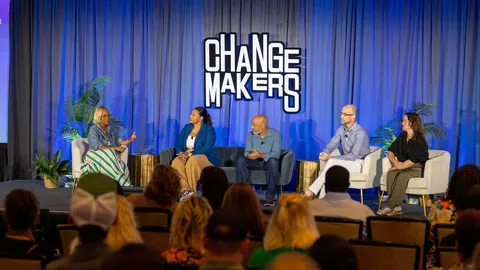




In 2026, more people than ever are seeking meaningful ways to serve the community and make a positive impact. Whether it’s helping kids thrive, supporting a neighbor’s new business, or simply building stronger connections on your block, there are more ways to serve than you might think.
And real, lasting change still starts the same way it always has — with everyday people using their gifts to help their community move forward.
Service today is not only about filling gaps; it’s about human progress. When more people are able to employ their gifts, collaborate to solve problems, and lead meaningful lives, they can make a lasting impact.
1. Start by listening to your neighbors
People living with the problem each day know what helps most. Before planning projects, gather small groups at a school, library, or faith center and ask simple questions:
- “What feels hardest for families here right now?”
- “What is already working that needs more support?”
- “If this neighborhood thrived in ten years, what would kids’ lives look like?”
Research from the GivingPulse project indicates that most people still want to help their neighbors and are willing to work with individuals who view the world differently than they do. Even in a noisy time, the “will” to serve the community is already there — it just needs better paths to action. Listening first respects people’s dignity and shifts service from doing things to people toward solving problems alongside them.
2. Make it easier for young people to volunteer
Success for a neighborhood isn’t just about adding more projects to the calendar. More people can see themselves as part of the solution. Many young people, especially in under-resourced communities, already help in quiet ways — such as by watching siblings, checking on elders, or serving at church.
Break A Difference in Baltimore designs “Social Impact Saturdays” for young people who juggle tight schedules. Local projects — like rebuilding homes, planting gardens, and packing overdose reversal kits — often come with rides and child care, and sometimes pay. These experiences do more than fill service hours; they help young people see how they truly matter to their community.
A simple guiding line could be: “Everyone in this neighborhood who wants to help has a real way to do it.” That kind of vision turns volunteering from a rare event into a regular, shared part of community life.
3. Teach and mentor kids after school
Community service often emphasizes youth support, and for good reason: When students thrive, whole neighborhoods change.
Local steps could include:
- Tutoring once a week at a nearby school or community center
- Helping run a reading club in a multifamily complex
- Mentoring teens on goals, jobs, or college paths
- Coaching a youth sports or arts club that builds confidence
In Akron, Ohio, Brandon Scarborough shows what this can look like through Dreams Academy. He and a network of mentors walk with young Black boys who face challenges like fatherlessness, offering weekly sessions centered on structure and belief in their potential. Over time, that mentorship model has grown into an all-boys school designed to reach students early and help them see themselves as leaders instead of statistics.
Stay up to date
4. Mentor new local entrepreneurs
Comparative advantage is a straightforward concept that directs effort where it yields the greatest benefit. If you run or manage a business, one of the strongest ways to serve your community is to walk alongside neighbors as they start their own businesses.
That’s what Hustle PHX does in Phoenix. It identifies “hidden entrepreneurs” with innovative ideas but limited access to networks and few financial resources. Through classes, mentoring, and relationship-based lending, Hustle PHX has helped over 250 entrepreneurs turn side hustles into real, community-rooted businesses — like Elisa’s Mini Pancakes, now a staple at the Downtown Phoenix Farmers Market.
Locally, a business owner can:
- Coach a neighbor on pricing, hiring, or cash flow
- Join a cohort as a volunteer advisor or guest speaker
- Offer a first contract, shelf space, or a pop-up spot to a new venture
- Host idea nights where residents can pitch solutions to local problems
When people build businesses that serve the community, they help families gain stability, create jobs, and open new paths for others.
5. Turn recovery into strength for others
People who’ve lived through addiction carry insight that can save lives. We are more than our worst moments, and strong communities make room for real second chances.
Communities like The Phoenix, where many leaders are in recovery themselves, follow this pattern. They host free fitness classes, outdoor adventures, and social events where the only “cost” is 48 hours of sobriety. Through peer support, members model what long-term recovery can look like.
Local volunteers can:
- Support peer-led recovery groups at a gym, park, or rec center
- Provide rides, child care, or snacks so more people can attend
- Invite neighbors to join activities that replace isolation with community
- Build programs with people in recovery, not for them
6. Turn everyday kindness into a weekly habit
Cleanups, food drives, and park projects are helpful, but they matter most when they bring neighbors together repeatedly. When people gather side by side, they begin to test ideas, see what works, and feel more involved in their communities.
GivingPulse data shows that generosity is already a weekly habit for most people. Well over half of Americans give in some form — time, money, items, or advocacy — in any given week, and about 20% of individuals in the study are giving in all four ways. That means the “average” neighbor is already serving the community; the opportunity now is to focus that energy where it can create the most long-term value.
7. Start community aid that trades help
Service doesn’t always come through a nonprofit. Some of the strongest communities grow from simple neighbor networks where people share rides, child care, meals, and tools, seeing everyone as both giver and receiver instead of as “helpers” and “the helped.”
GivingPulse data shows that this kind of neighbor-to-neighbor help — giving a ride, sharing a meal, covering a bill — often becomes a gateway to deeper civic engagement, with people who give informally more likely to also support local nonprofits and community projects.
Small acts of serving the community can become the first step toward long-term, structured impact.
When serving your community brings people back together
Serving the community in 2026 does not require perfect plans or big budgets. It starts with a clear vision, honest listening, and people willing to use their gifts where they add the most value. From homework help to business mentoring, from recovery support to language access, each step can unlock more potential in others and in the person who serves.
More about ways to serve your community in 2026
- Former teacher Melinda Hollandsworth turned kitchen-table homework help into Path United, a program that boosted graduation rates in her community.
- These three tips can help you create a more engaging and meaningful volunteer experience within your organization.
- Love Has No Limits provides long-term solutions for connecting families in crisis with faith-based community support.
Learn more about Stand Together's efforts to build strong and safe communities and explore ways you can partner with us.
Our Take: What a customer-first mindset can teach nonprofits
At this nonprofit for veterans, feedback is key to decision-making.
In Conversation: Positive Tomorrows on strengthening families through opportunity